numbers and benchmarks
How much does one competitive gymnast really cost my gym per season once I count everything?
Coach hours, floor time, meet entries, insurance and equipment wear all attach to each athlete. Here is how to build a defensible cost per athlete figure before you set tuition.
Once you count everything, a competitive gymnast costs your gym far more than the meet fees you pass through. The real figure is built from five buckets: coaching labor for every hour that athlete trains, an allocated share of rent and utilities for the floor space her group occupies, the meet costs you front before families pay, insurance and registration line items that attach per head, and consumables and equipment wear that nobody tracks because they are small until you add a season of them.
For most gyms running a full season, the honest number lands somewhere in the high hundreds to a few thousand dollars per athlete, and the spread between levels inside one gym is usually wider than the spread between gyms. That is not a benchmark. It is the shape of the answer. The number that matters is yours, and you can build it in an afternoon.
Below is the method, worked end to end with a single hypothetical athlete so you can see every assumption. Swap in your own payroll, your own lease and your own meet schedule. The arithmetic does not change.
Building the coaching labor cost per training hour
Start with fully loaded coach cost, not the hourly rate on the offer letter. Fully loaded means wage plus your employer payroll taxes, plus workers compensation premium, plus any benefit you pay, plus paid time you do not bill against, like staff meetings and required certification hours.
Take a coach at $26 per hour. Employer side payroll taxes run roughly 7.65 percent for Social Security and Medicare, plus federal and state unemployment. Add workers compensation, which for a gymnastics instruction classification is meaningfully higher than office work. If you assume a combined load of 20 percent, your fully loaded rate is $31.20 per hour. Confirm your actual load with your payroll provider and your comp carrier rather than borrowing that 20 percent.
Now convert to cost per athlete hour by dividing across the group actually on the floor.
- Optional group, 9 athletes, 2 coaches at $31.20 loaded: $62.40 per hour divided by 9, so $6.93 per athlete hour
- Compulsory group, 14 athletes, 2 coaches: $62.40 divided by 14, so $4.46 per athlete hour
Then multiply by hours. An optional athlete training 20 hours a week for 44 weeks trains 880 hours, at $6.93, giving $6,098 in direct coaching labor. A Level 4 athlete at 9 hours a week for 40 weeks trains 360 hours, at $4.46, giving $1,606. That single gap explains most of what follows.
Do not forget the hours away from the floor
Choreography sessions, private lessons you comp, and meet day coaching are all labor. Meet day especially: a coach on the floor from 7am to 6pm at a two session meet is eleven paid hours serving perhaps twelve athletes. Eight meets a season at eleven hours, two coaches, $31.20 loaded, divided across twelve athletes, is $457 per athlete in meet day labor alone.
Keep reading: What does a judge see in the first ten seconds of a compulsory beam routine at a meet?
Allocating rent and floor time across training groups
Occupancy costs are rent, utilities, property insurance, and any triple net charges. They do not vary with how many girls train, so allocate them by the resource that is actually scarce: floor hours.
Say your total occupancy is $14,000 per month, or $168,000 a year. Your gym is programmed 70 hours a week across 50 weeks, giving 3,500 usable gym hours. That is $48 per gym hour for the whole building.
Competitive team does not use the whole building at once, so allocate by share of space. If team practice occupies roughly 60 percent of the floor during its blocks, charge $28.80 per hour to that block, then divide by the athletes in it. Nine optionals training 880 hours a year at $28.80 divided by 9 is $2,816 per optional athlete. Fourteen compulsories at 360 hours is $28.80 divided by 14 times 360, or $741.
This is where owners get surprised. Space is not free, and the high hour athlete consumes it relentlessly.
Meet entries, coach fees and travel reimbursement per athlete
Meet costs split into what the family pays directly and what you front. Track both, because cash you front and collect late is still cash you financed.
| Item | Basis | Season total per athlete |
|---|---|---|
| Entry fees | 8 meets averaging $110 | $880 |
| Coach fee assessed by host | $60 per coach per meet, 2 coaches, 12 athletes | $80 |
| Coach travel and lodging | 2 away meets, split across the group | $150 |
| Coach meal per diem | Your policy, 10 meet days | $45 |
| State and regional qualifying entries | Optionals only, assumed here | $210 |
Every figure in that table is an assumption for illustration. Pull your actual host invoices for last season and you will have real ones in twenty minutes.
Keep reading: How do I move a Level 3 gymnast to Level 4 without skipping the skills USAG actually requires?
Insurance, membership and registration line items
These are the cleanest numbers you will find because they are literally invoiced per head. For each athlete, count the annual competitive athlete membership with your sanctioning organization, any state association registration, your general liability and accident policy allocated per participant, and background screening and certification costs for staff spread across the athletes they serve.
General liability is usually quoted against payroll or revenue rather than headcount, so allocate it. If your annual premium package is $9,600 and you serve 240 total athletes across all programs, that is $40 per athlete. If competitive athletes drive a disproportionate share of the risk profile, weight it: charge team athletes double the recreational rate and let the math balance to the same total.
Equipment wear, chalk, tape and consumables
Consumables feel trivial and are not. Chalk, athletic tape, prewrap, grip replacements you cover, mat cleaner, first aid supplies, and the printing and ribbons for your own hosted events all add up.
Equipment wear is the bigger half. Treat it as depreciation rather than a purchase shock. Uneven bars rails, beam padding, spring floor springs and panels, tumble track belts, and pit foam all have a service life. A $6,000 spring floor refurbishment on a seven year cycle is $857 a year. A $1,400 set of rails replaced every three years is $467 a year. Add your real items, total them, divide by athlete hours rather than athlete headcount, because the twenty hour athlete wears the equipment more than twice as hard as the nine hour athlete.
If your annual wear and consumables total is $9,000 and your gym logs 60,000 athlete hours a year, that is $0.15 per athlete hour. The optional at 880 hours carries $132. The compulsory at 360 hours carries $54.
See how VaultChalk handles this for gymnastics and cheer gyms
Turning total cost into a tuition and fee structure
Stack the buckets and look at the two athletes side by side.
| Cost bucket | Optional, 20 hrs/wk | Level 4, 9 hrs/wk |
|---|---|---|
| Coaching labor, training | $6,098 | $1,606 |
| Coaching labor, meet days | $457 | $457 |
| Occupancy allocation | $2,816 | $741 |
| Meet costs you front | $1,365 | $1,155 |
| Insurance, membership, registration | $225 | $185 |
| Wear and consumables | $132 | $54 |
| Total annual cost | $11,093 | $4,198 |
| Cost per month over 12 | $924 | $350 |
Note what is missing: administration, marketing, software, your own salary, and the cost of the office staff who chase unpaid accounts. Those are overhead. Add them as a percentage on top, and be honest about the number. If overhead runs 15 percent of your cost base, the optional athlete's true cost is roughly $12,757.
Now price. If you want a 20 percent contribution margin, the optional athlete needs to generate about $15,900 across tuition plus fees, or $1,325 a month. If that number is far above what your market will bear, you have three levers and only three: raise hours per coach on the floor, raise group size, or reduce hours in the program. Everything else is wishing.
A decision rule for adding a training hour
Before you add an hour to any group's weekly schedule, compute it directly. Marginal cost of one added weekly hour equals the loaded coach cost for that hour, plus the occupancy rate for that hour, divided by the athletes in the group. For our optional group: $62.40 plus $28.80 equals $91.20, divided by 9, equals $10.13 per athlete per week, or $446 across a 44 week season. If you are not prepared to add $446 to that athlete's annual price, do not add the hour.
Where the margin actually sits across levels
Run this for every level and a pattern usually appears. Compulsory groups train fewer hours in larger groups, so they carry low cost per athlete and often produce the healthiest margin per head. Optional groups train enormous hours in small groups, and unless tuition rises steeply with hours, they are subsidized.
That subsidy is not automatically wrong. Optional athletes are your competitive results, your recruiting story and your retention engine, and losing them can cost you the compulsory pipeline that funds them. But it should be a decision you made, not one you discovered in March.
Two things usually fix the worst of it. First, tier tuition by training hours rather than by level name, so a group that adds an hour also adds revenue. Second, price meet fees to include the coach fee, per diem and travel share explicitly, so you stop absorbing them silently.
Getting to a number you can defend
None of this works from memory. You need actual hours trained per athlete, actual group sizes, actual meet entries per athlete, and a clean record of what each family was charged and what they paid.
VaultChalk keeps those inputs current as a side effect of running the season: athletes tracked by level and training group, meet entries recorded per athlete, and fees billed and collected against the same record. When you sit down to set next season's tuition, the hours, the entries and the payment history are already there, and the cost per athlete stops being an estimate you argue about.
From the people who publish Chalk Line
Put every level, skill and meet entry on one roster
VaultChalk keeps skill progression, level placement, meet entries and season fees in a single record your coaching staff can open from the floor, with a parent view that answers the question before it reaches you at the chalk bowl.
Read also
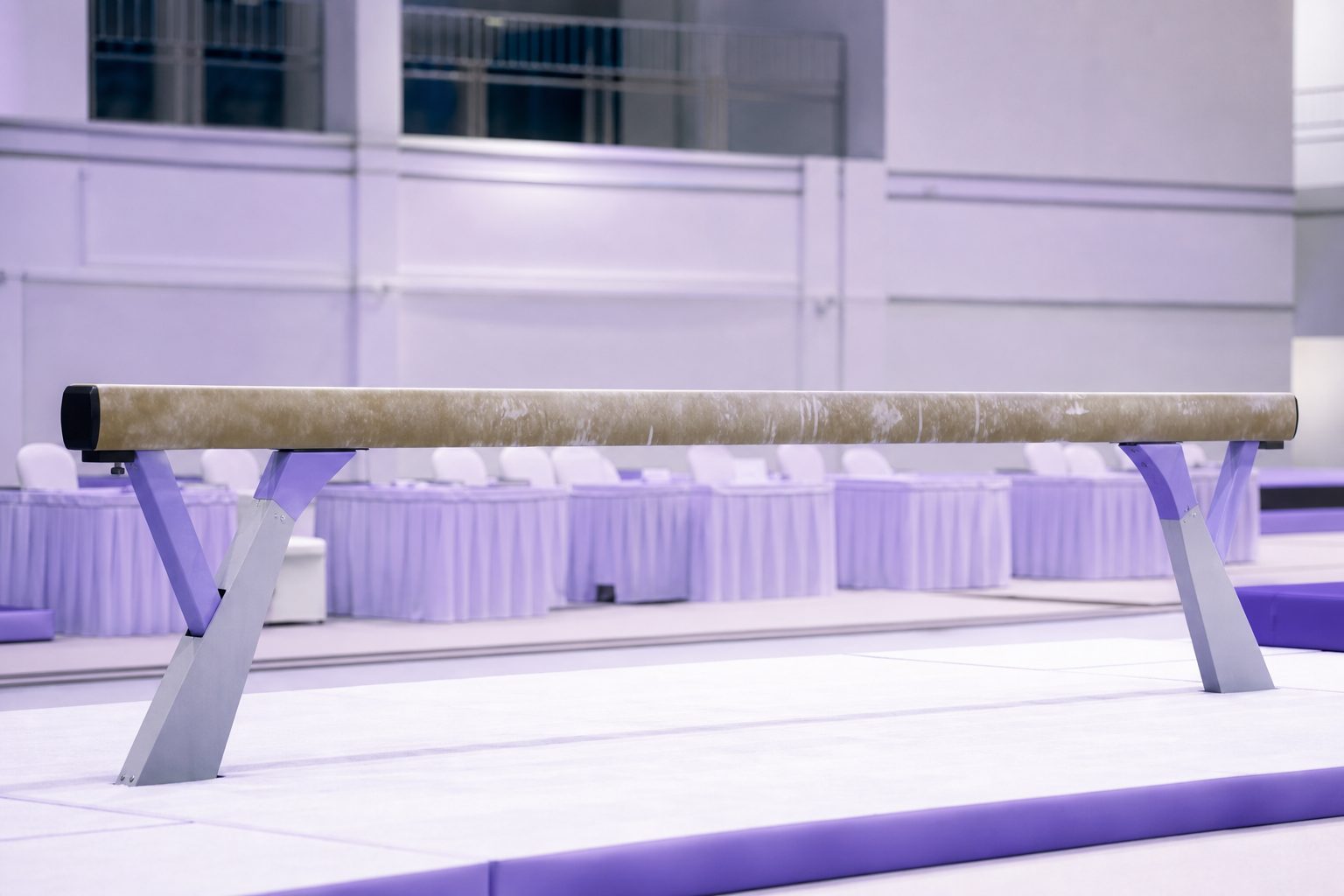
What does a judge see in the first ten seconds of a compulsory beam routine at a meet?
From the meet floor: how judging panels are seated, what deductions land earliest in a compulsory beam routine, and what coaches can realistically fix in the warm up gym.
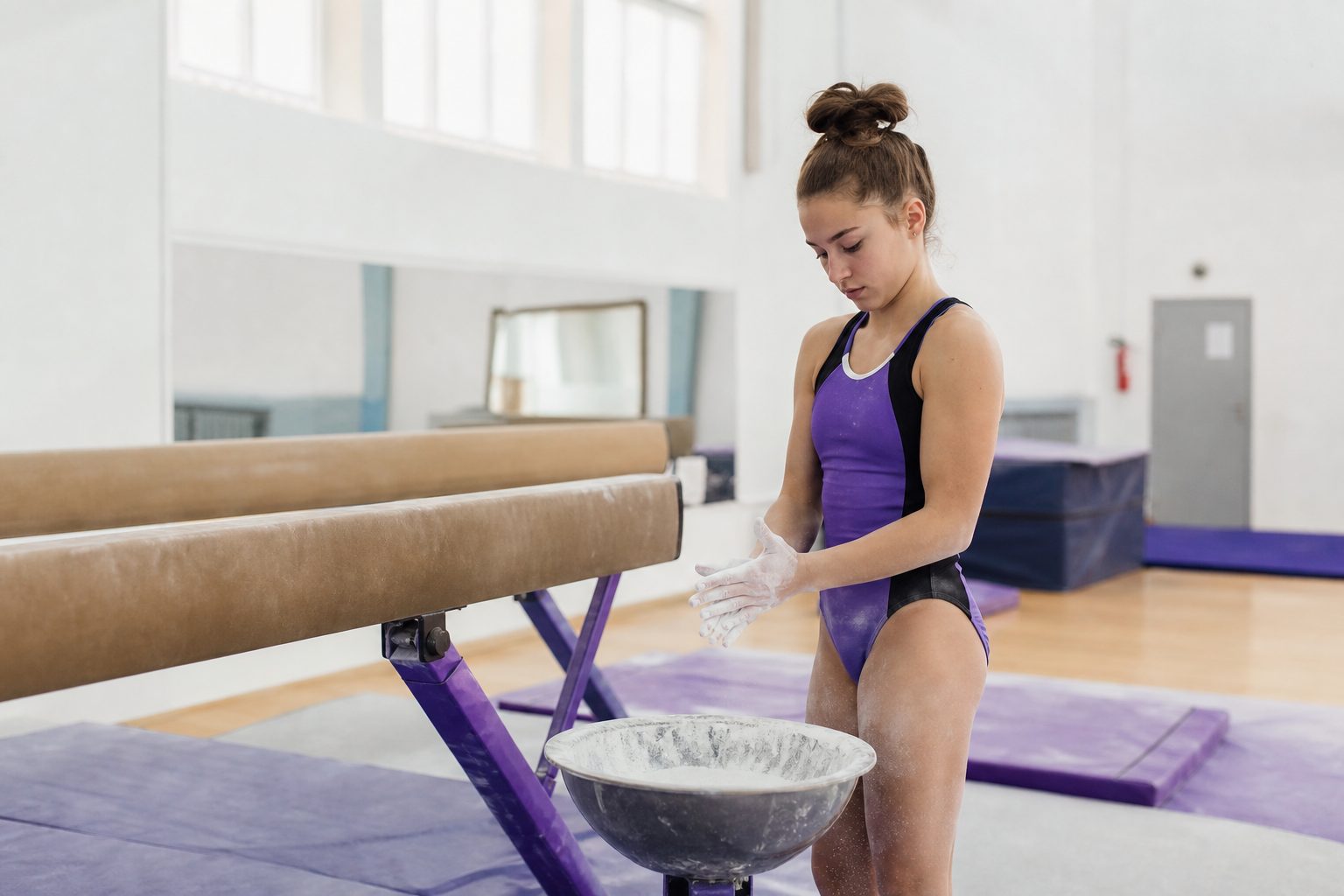
How do I move a Level 3 gymnast to Level 4 without skipping the skills USAG actually requires?
A working walkthrough of the USA Gymnastics Development Program compulsory structure, what a Level 4 routine demands, and how to build a promotion checklist your staff can sign off on.

Should I run my cheer program under USASF rules or stay with a school league schedule?
All star and scholastic cheer differ in credentialing, season length, cost per athlete and travel load. Here is how the two paths compare for a gym deciding where to put its teams.